


Welcome to the Phædrus Audio listening room where you can audition our products via lossless FLAC files or high-quality 192kbps, constant-bitrate mp3's. (Your browser will choose the version it supports with FLAC as preference.)
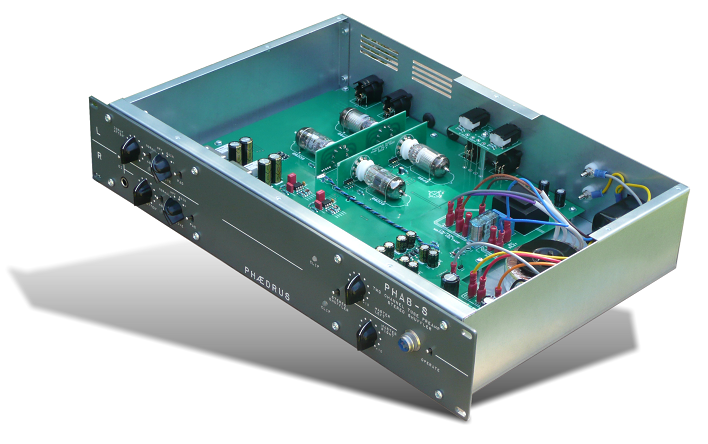

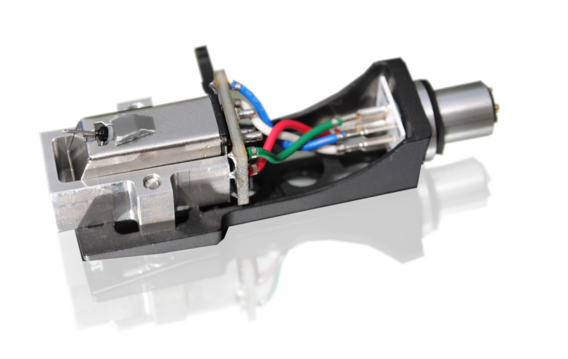
The following tracks were all recorded with a tube microphone (Rode NTK) and the original, hand-built London Console which was designed to re-create the famous mixers of the 1960's. No compression was employed (beyond carefully "riding the faders"). It was the success of the London Console in producing a unique and "different" sound that Phædrus Audio was formed to make the various parts of the console: mic amps; EQ; vari-mu compressor; and stereo Shuffler available as modules as part of the London Series and now available in the PHAB-S and PHUSION rack-mount products.
Here is a example of a vocal recording of a song from the musical Copperfield. Not the well known jazz-standard, this is the character Steerforth's song from the second act of the play.
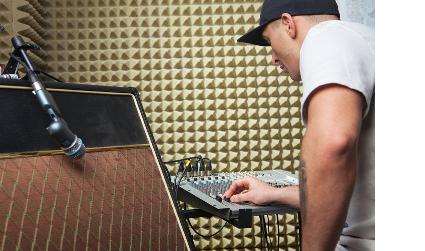
The following tracks were all recorded with the original Perfect Pitch Music London Console and were deliberately recorded with - and in - a 1960's style. All instrument amp's were largely miked and DI was avoided as much as possible, except for the bass.
Nuova Vita - Guitars all miked (with PHABs); lead compressed with PHAMULUS; bass DI (with PHI/PHUSION). Samples direct to mixer via PHAB preamps at line level. EQ'd with PHILTER/PHUSION.
Tar Tin - Guitars all miked (with PHABs) and compressed with PHAMULUS; bass DI. Samples direct to mixer via PHAB stages at line level. EQ'd with PHILTER/ PHUSION.
Báid Fliuch - One guitar (Strat') amp'ed with Electric Road amplifier, miked with PHAB preamps, recorded twice, lead compressed with PHAMULUS. EQ'd with PHILTER/PHUSION EQ.
Doggone - Attempt at getting a sixties guitar-group sound. Listen to those overdriven Vox amps (captured via PHAB preamp's). EQ'd with PHILTER /PHUSION.
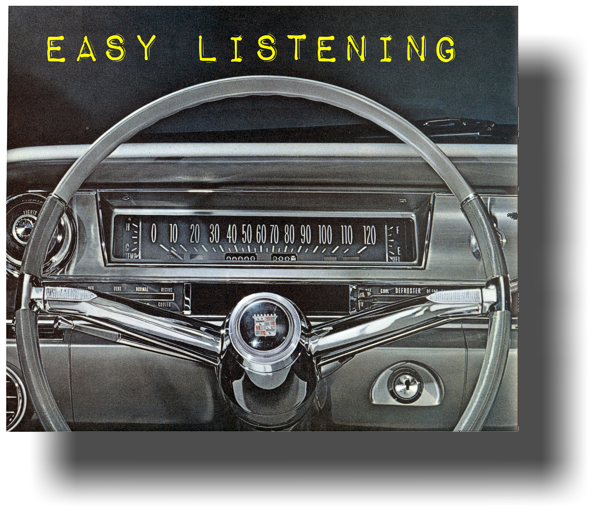 We wanted to have a try at getting some classic "Easy Listening" sounds with the London Console. It also gave us an excuse to come up with an easy-listening album cover too! Here are some of the results from the sessions.
Catamarano - A theme to accompany the Jet Set. Synths and samples via PHAB preamps. EQ'd with PHILTER / PHUSION.
Trab im Schwarzwald - Something cheesy. All sampled instruments via PHABs preamps. Bass DI (via PHUSION), compressed with PHAMULUS). Guitars recorded (PHAB preamps). EQ'd with PHILTER /PHUSION.
Surfing Sundae - Plectrums in overdrive. Electric Road amp'; PHAB preamps; Bass DI (PHUSION). EQ'd with PHILTER/ PHUSION.
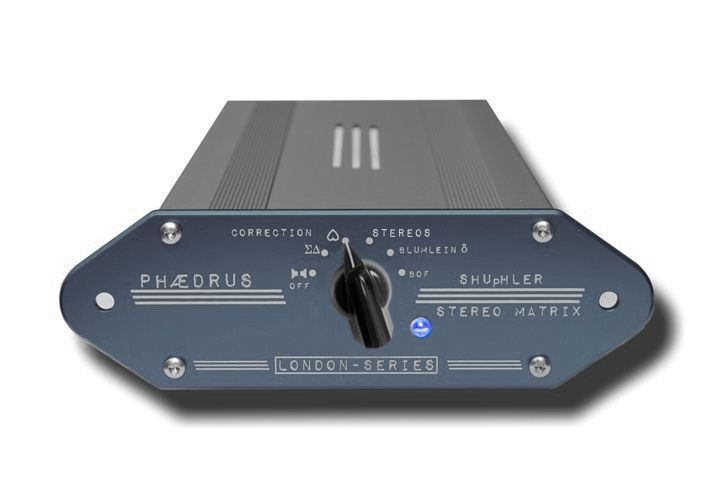
Some brief musical extracts of the various Shuffling techniques are given below:
 The shuffling technique selected when the SHUpHLER is set here is an entirely new technique and is intended to compensate for various shortcomings in crossed-cardioid recordings which are usually accused of lacking "spaciousness". We call it "Phædrus Crossed Fours" or "Rectified Cosine microphone technique" and you can read more here.
The first part of each musical extract (taken from rehersal tapes, note the false entry!) is the signal direct from the microphones and the reprise is treated with the "crossed four" process.
Here is another demo of the "Phædrus Crossed Fours" or "Rectified Cosine microphone technique"; this time in a very reverberant acoustic.
Blumlein δ The greater part of Alan Blumlein's (1933) patent is concerned with a binaural stereophonic microphone arrangement in which two omnidirectional microphones are spaced about 8 inches apart (like the ears). Signals from microphones so arranged tend to produce excellent stereo on headphones, but disappointing results on loudspeakers. Blumlein contrived a theoretically sound and practical system for treating these signals for loudspeaker replay. The Phædrus Audio SHUpHLER has a modern implementation of Blumlein's original "shuffler" when the switch is set in the Blumlein δ position.I tried it on several recordings made with a Schneider disc (a variation on the Jecklin disc theme) and noticed distinctly more precise imaging focus and a lovely low-end ‘bloom’ and depth, which seemed to make the recording more real and natural somehow. It was broadly beneficial when applied to ORTF (near-spaced cardioids) recordings, too, again improving the focus and depth.
Once again, the first part of the musical extract is the signal direct from near-spaced omni microphones and the reprise is treated with the Blumlein δ process.
 |
| Stereo - what can the matter be? |
The first part of the musical extract is the signal direct from crossed-cardioid microphones and the reprise is treated with the FRANCINSTIEN process.
BoF - The Stereosonic Shuffler actually over-compensated for the theoretical correction required for pure, "pan-poted" stereo, multi-track recordings. This is possibly because the EMI filter was intended only for stereo recordings made with stereo microphone arrays. This is the motivation for another, completely new, Shuffling process called Bride of FRANCINSTIEN (or BoF). All the theory behind this is given here.
The first part of this musical extract is the signal direct from the mixer and the reprise is treated with the Bride of FRANCINSTIEN shuffler process.
For the very latest in what's possible with stereo shuffling, go to our FRANCINSTIEN WARP demo.
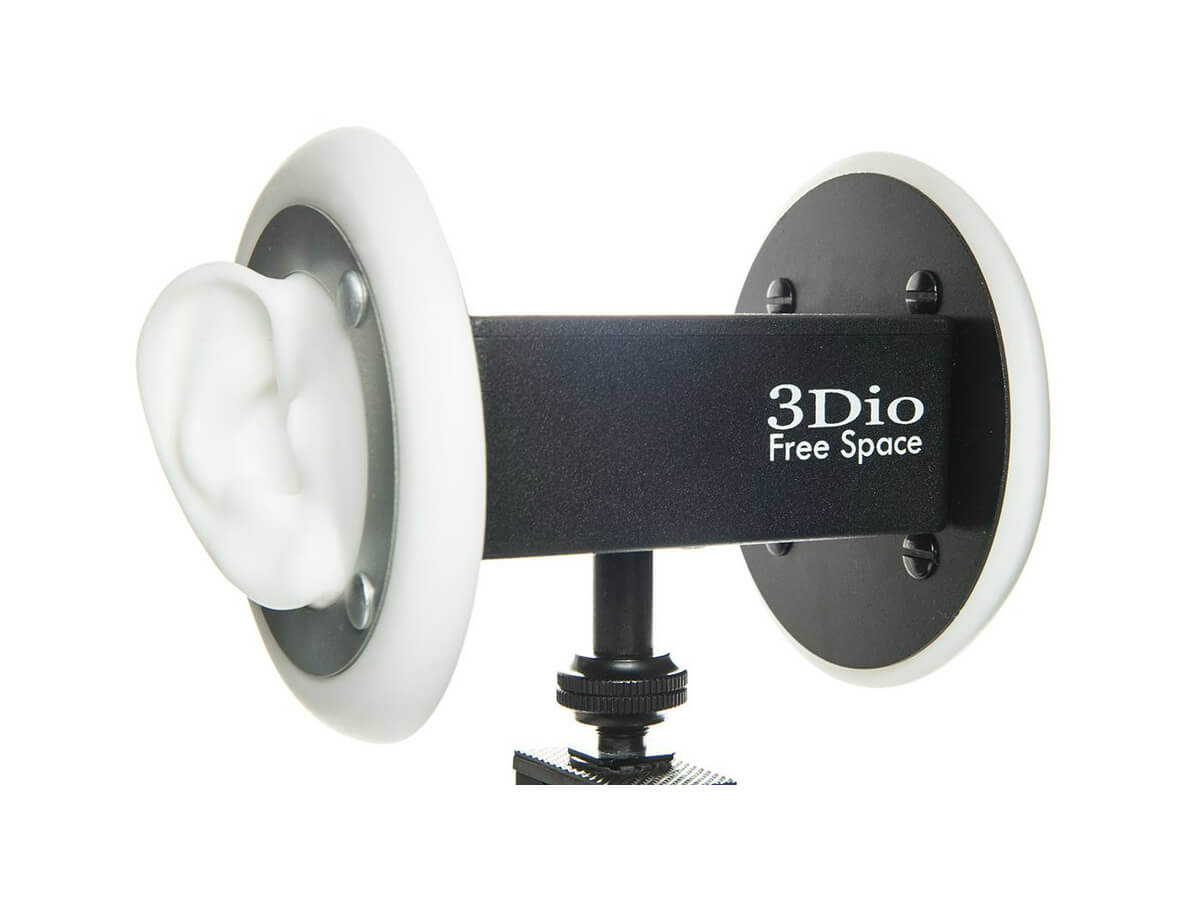 The SHUpHLER also has applications in 3D sound for entertainment and VR. The Blumlein δ setting may be used to transform binaural recordings into immersive sound fields delivered by standard stereo speakers.
Blumlein's original microphone technique involving spaced omni microphones is often called, the greatest forgotten invention in audio engineering. His ideas (100 years ahead of their time) were brought up to date in a proposed microphone technique named TIHM - for Time Intensity Hybrid Microphone1.
The TIHM (Blumlein δ) algorithm included in the SHUpHLER and in the Stereo Lab software suite. Here are a couple of demos of what's possible.
The first demo is of American folk singer Suzy Bogguss and is a recording of a rehersal in her home with the various musicians disposed around the binaural array. The first part of the recording is the original binaural version (listen to this on headphones). The second part (01:05) is processed in SHUpHLER to generate a binaural effect from stereo loudspeakers.
The second example is of binaural street recording in New York. Once again, the first part of the recording is the binaural version (listen to this on headphones). The second part (01:00) is processed in Stereo Lab to generate a binaural effect from stereo loudspeakers.
1. Multimedia and Virtual Reality Engineering. Brice, R. (1997) Newnes
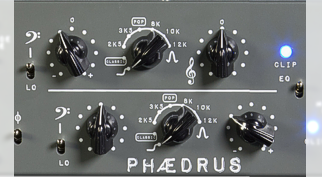 The equalisation available in the PHUSION (or PHILTER) has its own demo page.
 Some of the PHUSION equalisation settings (as well as the preamp colouration) are encapsulated in free impulse responses which are made available in the Phædrus Impulse Response Library.
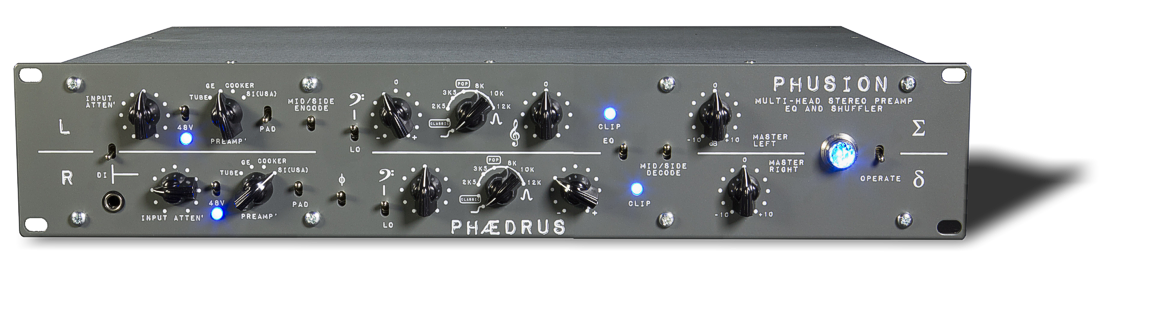
The PHUSION is equipped with four microphone preamplifiers for each channel. They are: a classic tube preamp; British germanium transistor preamp, British modified hi-fi transistor preamp; American discrete op-amp preamp. Each has a very different character as demonstrated in this video.
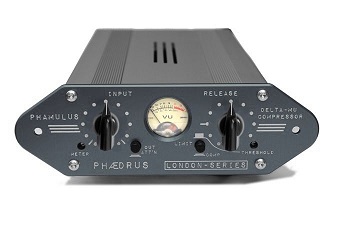
Electric guitar test.
Used across a very simple mix.
 Vocal test.
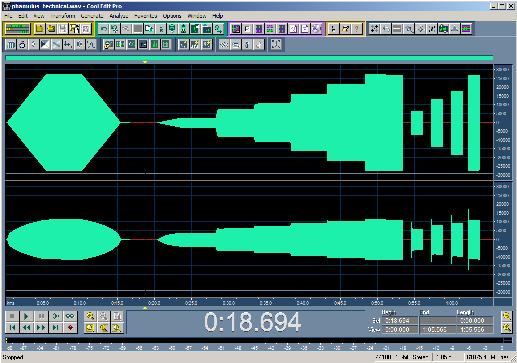
And here for the techies, here is a series of sine wave tests ramped and burst which demonstrate the level and dynamic performance of the compressor (release set to position 3 which is equivalent to the minimum Altec position). Input is on the left, output on the right. The waveform of the file is instructive (see right).
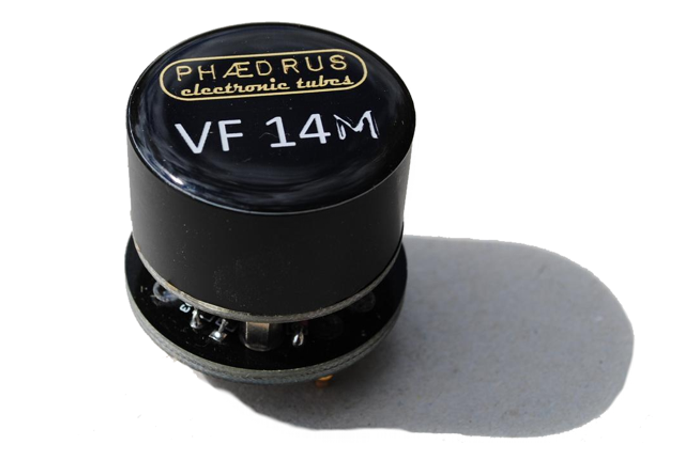 Here's an audio file to hear the difference between an alternative VF14M replacement (recorded first) and the Phædrus Audio VF14M Electronic TubeTM (recorded second).
A second example which demonstrates the difference between a new VF14M Electronic TubeTM and an old German tube. In this example audio is fed to amplifier via a capsule simulator as explained here. The audio captured with the German tube as the amplifier (played first) has been further amplified in the DAW to bring it closer to the gain of the Phædrus Audio VF14M Electronic TubeTM (which appears second). Low mutual conductance (gm) is a classic fault in an old VF14 tube and this causes the impedance-converter gain to fall far below the Neumann specification for the U47 (U48). Unfortunately, noise performance in a tube is related to the reciprocal of mutual conductance, so low gm means lower-gain and higher-noise.

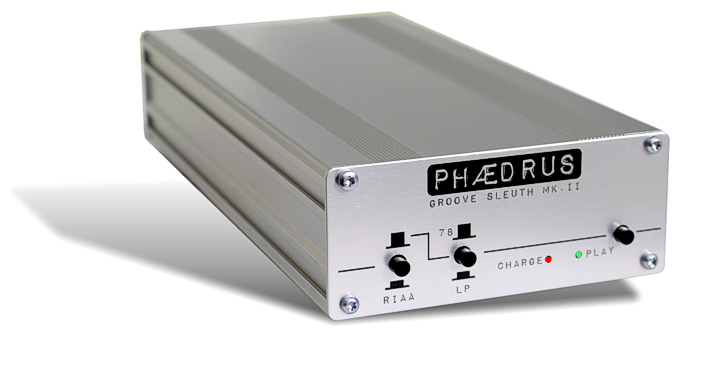
Here we are concerned with the combination of the Phædrus Audio Groove Sleuth Mk. II preamplifier and the needle-drop/archive software Stereo Lab from Pspatial Audio.
Stereo Lab incorporates an audiophile de-clicker doesn't interpolate or predict the audio. Instead, a robust click-detection algorithm is coupled to an adaptive attenuator which lowers the intensity of clicks rather than attempting to remove them altogether. In this way, audio is never lost or synthesised.
The Stereo Lab detection algorithm is virtually foolproof. It is biased against detection so, in the event of an ambiguous detection it will rather let a click go through than replace good audio.
This record was made in the 1950s on DECCA's then state-of-the-art recording system known as FFRR for Full Frequency Range Recording but before the switchover to RIAA equalisation.
Early Decca LPs of this period used the Decca 33⅓ recording characteristic (500C-11.5). If RIAA equalisation is used to reproduce these discs, the bass is over-boosted and the treble muted. Pspatial Audio's Stereo Lab has equalisers which are optimised for Decca records.
The examples below are in two parts. The first part is a recording of an all analogue needle-drop recorded via a very high-quality RIAA pre-amplifier. The second section is the same short musical segment recorded with Groove Sleuth preamplifier and processed via Stereo Lab.
In this case, the software was responsible for the DECCA EQ correction and the click removal.
Demo 1 - from the Adagio introduction to movement 1 of Dvorak's Symphony no. 9 in E minor (From the New World)
Things to listen out for:
Demo 2 - from the famous Largo
A demo for the technically minded this.... The track contains a recording of the residual noise of the LP capture system, before the needle is placed on the record and then after. Once again, the first is with a high-quality analogue set-up: the second via the Groove Sleuth, the PHLUX active cartridge and Stereo Lab. The track is boosted in level by 30dB above normal so as to make the differences easier to hear. Note that:
All of which means, when you process needle-drops with Stereo Lab, you're listening to the music, pure and separated from the noise mechanisms which surround replay from records.
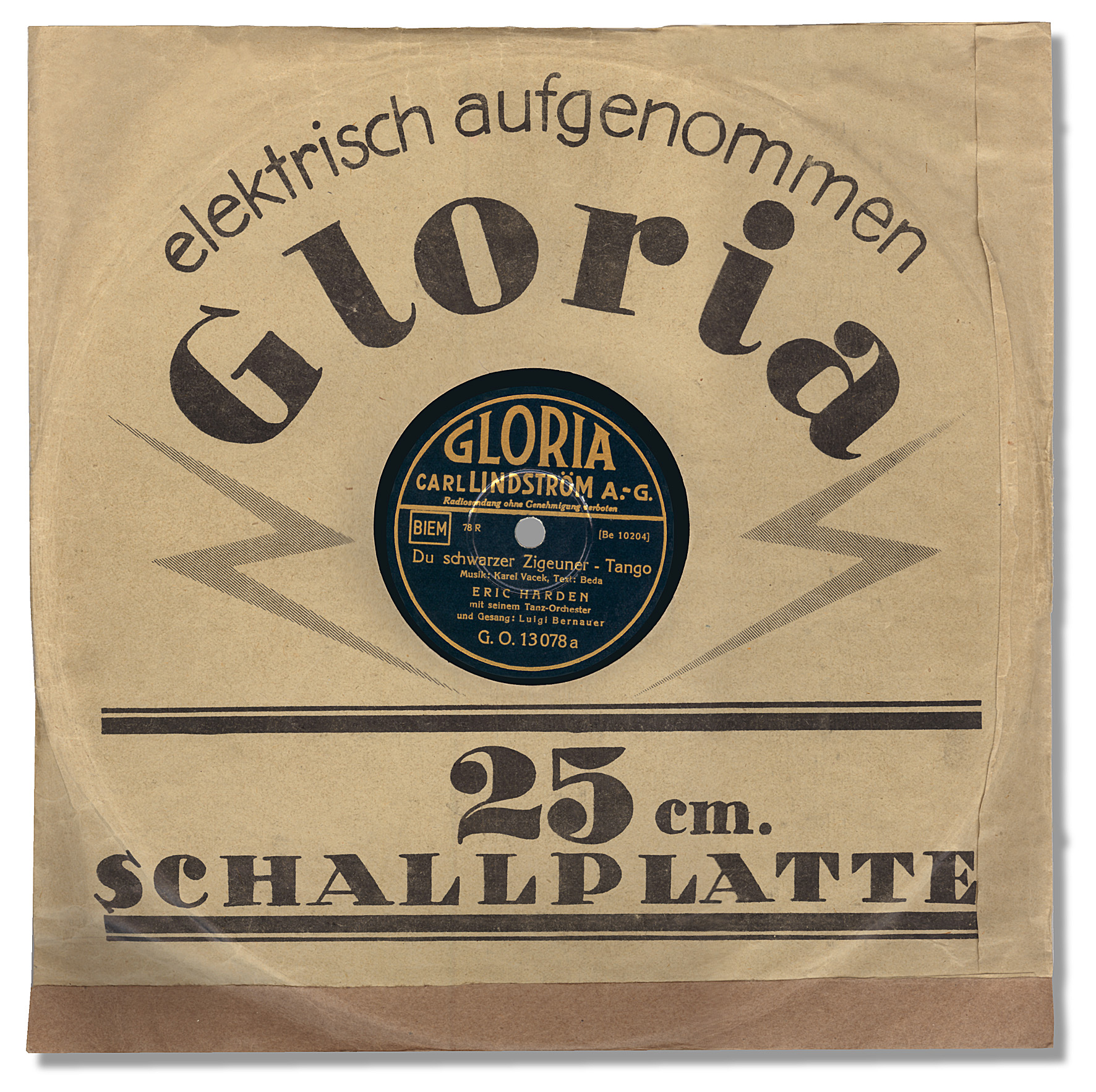
Unquestionably, the most important technical advance in the history of recorded sound was made in 1948 with the introduction of the plastic, long-playing (LP) record by Columbia Records.
Nevertheless, the recorded legacy of eighty years of planet Earth exists on the "78 RPM" records which predated LPs. So we need to take them seriously and see how the information might best be teased from their rough grooves!
Equalisation of pre-LP (or shellac-era) records
There appear to have been a plethora of recording characteristics used during the shellac period (and possibly even more opinions on those characteristics!). In all cases Stereo Lab provides the appropriate equalisation curves.
Crackle remover
Seventy-eight records exhibit pops and clicks of a very short duration and which are present almost all the time. We call them "crackles". The Stereo Lab crackle remover is automatically adaptive and is very effective. Unlike so many other, competitive techniques, the crackle-reduction has no effect on the high-frequencies so that the sound is not "dulled" when it is cleaned-up.
GRAδIENT
GRAδIENT stands for GRAmophone DIsc Enhanced Noise Treatment and is a unique noise-reduction process for shellac-era needle-drops introduced for the first time in Stereo Lab.
A final demo is here and brings the various advantages of software processing together. The first half of the file is a recording of Ravel's Introduction and Allegro for Harp* recorded via a hardware preamplifier equipped the appropriate 500N-flat equalisation for a British Columbia release of the period. The second half is the same music recorded as a flat-response needle-drop using Groove Sleuth Mk. II and processed in Stereo Lab using the correct equalisation, crackle removal and GRAδIENT. The differences speak for themselves!

*Columbia DX 1310, DX 1311. with string quartet, flute and clarinet; harp solo by John Cockerill
But how to demonstrate 4-channel sound on a stereo computer?
What we have done is offer a stereo track in which the front stereo pair plays for the first 35 seconds, followed by the rear stereo pair. Of course, this can't communicate the drama of the 4-channel decode, but it does demonstrate the remarkable separation obtained in the Stereo Lab QS system decode; it's almost as if two stems from the multitrack are being solo-ed and you are just hearing the microphone spill.
This system used high-frequency subcarriers, way above the hearing range, which were modulated to contain the extra information for quadraphonic. The whole arrangement was a bit fragile because the stylus had to be able to recover these very high-frequency signals without distortion or crosstalk and this proved a little hard to do reliably. The JVC CD-4 system is explained in detail on our partner Pspatial Audio's website.
Here we have a short demo - and, once again, of Tony Mottola together with Vinnie Bell, Al Caiola, Don Arnone and Al Casamenti from a disc called Quad Guitars. In this short demo, there are four, four-bar solos, one from each position around the room in the sequence: left-front; right-back; right-front; and left-back. Once again, we hear the front pair of speakers first so the first and third solos are prominent: afterwards we hear the rears where the second and fourth predominate.
This is a demo of the (as yet experimental) CD-4 decode in the Stereo Lab development programme.
The CD-4 decoder in Stereo Lab will break with tradition in that it decodes to an intermediate Ambisonics format which means rather than decoding to four, dismembered loudspeaker points, it decodes to an integrated Ambisonics sound-field. There are both psychoacoustic and engineering advantages to this as we can exploit redundancy in the CD-4 signals to adapt the Ambisonics decode when the signal quality from the "helper" signal demodulators is not all it should be. Here is an Ambisonics sound-field decode of Bits and Pieces by The Average White Band. The front pair play first; note the percussion and saxophones dominate across the stereo field. The rear pair come after to reveal the guitars; one strummed, the other playing the ostinato riff.
Quadraphonic decoding demo (in Stereo Lab)
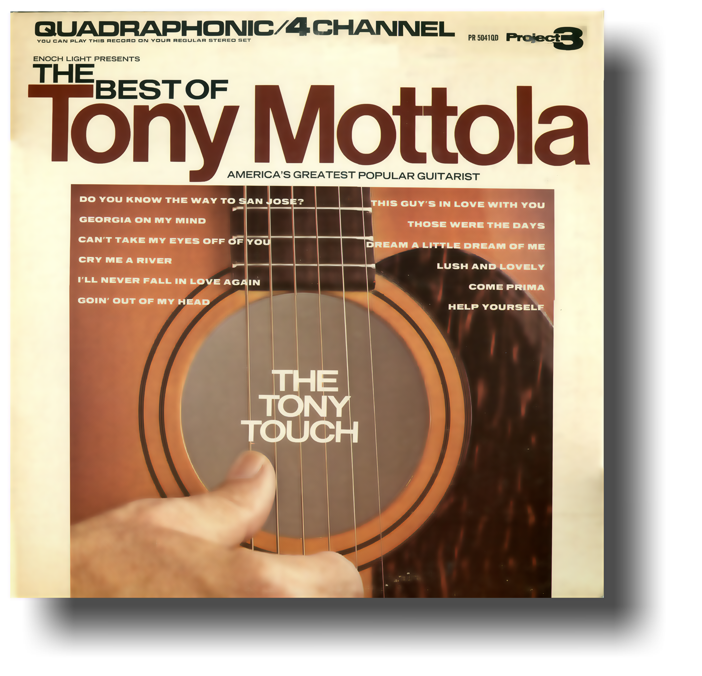 This light jazz title is a favourite amongst quad' fans and it's easy to see why. The production plays to the QS system's strengths, with a limited left-right image width better to secure good front-back separation. For those of us who don't remember quadraphonic sound the first time around, it's quite an experience to hear multi-channel sound of this quality from the grooves of a humble LP.
 The QS quadraphonic demonstration above works well because the engineers carefully chose positions where they would get good isolation. That works when there are just two musical lines to separate. But suppose we want to present four individual lines; one each from one of the four speakers. To do this successfully more draconian means are required and one such was the CD-4 discrete quadraphonic system developed by JVC.
Hi-fi products
The stereo correction techniques collectively known as FRANCINSTIEN have been continuously developed since the 1990s when the first, passive matrix was produced and sold by Perfect Pitch Music.
The most radical improvement comes with the incorporation of findings derived from a theoretical analysis of a stereophonic sound reproduction system as a sub-optimal wavefront reconstruction system which post-dates the original research which informed the original Stereo Shuffling techniques by thirty years.
The result is the FRANCINSTIEN WARP (for WAvefront Recontruction Processor) ...... What does it sound like?
Here unprocessed and FRANCINSTIEN WARP processed musical examples may be A/B compared. Some browsers may not parse this, so the two audio files are available as separate examples below.
Remember, FRANCINSTIEN WARP is a processor for loudspeaker listening: there is little effect on headphones.
Original audio FRANCINSTIEN WARPed
Volume
Or, in a non A/B format: the first recording contains various samples of music, the second, the WARPed examples.
Here, the same examples have been processed by FRANCINSTIEN WARP.
In this section we have a demonstration of DisC, Phædrus Audio's displacement sensitive cartridge which does not require RIAA correction and its thereby ideally suited to the highest-quality real-time replay of analogue records.
Here the DisC (and ADAMANTINE base station) are compared with a respected moving-magnet cartridge in the same price bracket.
Here's the results from the moving-magnet cartridge coupled with a standard RIAA preamplifier.
And here's the DisC-ADAMANTINE combination.
This section is βeta. It does not work in all browsers.
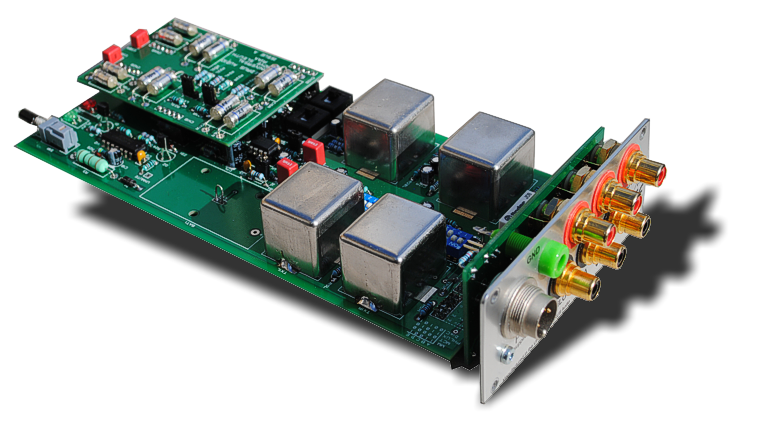
 Here, the same two files as in the example above are arranged to play simultaneously. A button ("Toggle") enables you to switch between the two recordings; enabling you to A/B compare the MM cartridge with the Phædrus Audio DisC.
Track 1 is the DisC: track 2 the MM.
Read a new article by Richard Brice about the DisC cartridge and how it works.
Original tracks on this website © Perfect Pitch Music 2012 - 2018. All rights reserved
Address all mail to sales@phaedrus-audio.com